

Holiday inventory has to be bought and paid for weeks before customers buy it. If your supplier wants payment before your holiday sales arrive, you need working capital for the gap. A merchant cash advance can fund that purchase from your business deposits in days, but it only makes sense if you are confident the stock will sell within the advance term.
Here is how to size the order, what to check before you fund it, and when outside capital is or is not the right call.
Why Holiday Inventory Creates a Cash Gap
The timing works against you. Suppliers set order deadlines well ahead of the season, and many want a deposit or full payment before they ship. Your holiday revenue comes in after the stock is on the shelf or in the warehouse, and some of it after the holidays, when returns and slower January sales settle out.
In between, cash that would normally cover payroll, rent and marketing is sitting in boxes. That is the gap inventory funding fills.
How Much Inventory Should You Buy?
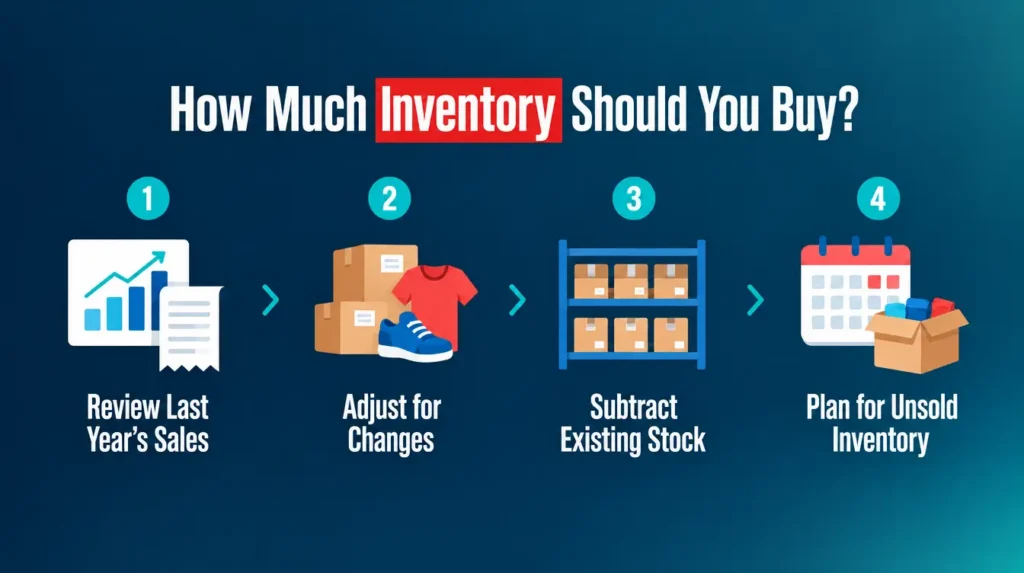
Start from last year, not from hope.
- Pull last year’s sales for the same weeks by product or category.
- Adjust for what has changed: new products, dropped lines, price changes, a new location or channel.
- Subtract stock you already have on hand.
- Decide how much you are willing to carry into January if sales come in below plan.
The last step sets your ceiling. An order sized to your best-case forecast leaves you holding stock and remittances at the same time if the season is soft.
Supplier Payment Timing
Before you look at funding, look at your supplier terms. Ask each supplier:
- When is the order deadline for holiday delivery?
- Is a deposit required, and how much is due on order versus on delivery?
- Do you offer net terms, and could you extend them for a holiday order?
- Is there an early-order or volume price, and is it worth more than the cost of capital to take it?
Supplier terms are often the cheapest working capital you have. Use them first, and fund only the part they do not cover.
Sell-Through Risk: What If the Stock Sells Slower Than Expected?
Sell-through is how much of what you bought actually sells, and how fast. It is the main risk in any inventory purchase, and it matters more when the purchase is funded.
If stock sells slower than planned:
- Cash comes back later than you expected, while remittances continue on the schedule in your agreement.
- You may need to discount to move it, which shrinks the margin that was supposed to cover the cost of the capital.
- Seasonal items can lose most of their value once the season passes.
Before you fund an order, run the plan at a lower sell-through rate than you expect. If the business can still carry its normal costs and the remittance in that case, the order is sized sensibly. If it cannot, buy less or fund less.
Watch Your Deposit Pattern
Underwriting for a merchant cash advance reads your business bank deposits: how much revenue comes in and how consistent it is. Your deposit pattern also tells you how a remittance will feel.
- If your deposits are steady all year, a daily or weekly remittance is easier to plan around.
- If most of your revenue lands in November and December, plan for the months before and after, when deposits are thinner and the remittance is the same unless your agreement says otherwise.
Ask how remittances work before you sign. They are made by ACH from your business bank account, daily or weekly, according to your agreement. Depending on the program and the reconciliation terms, remittances may reflect changes in revenue, but do not assume they change automatically.
What Inventory Funding Costs
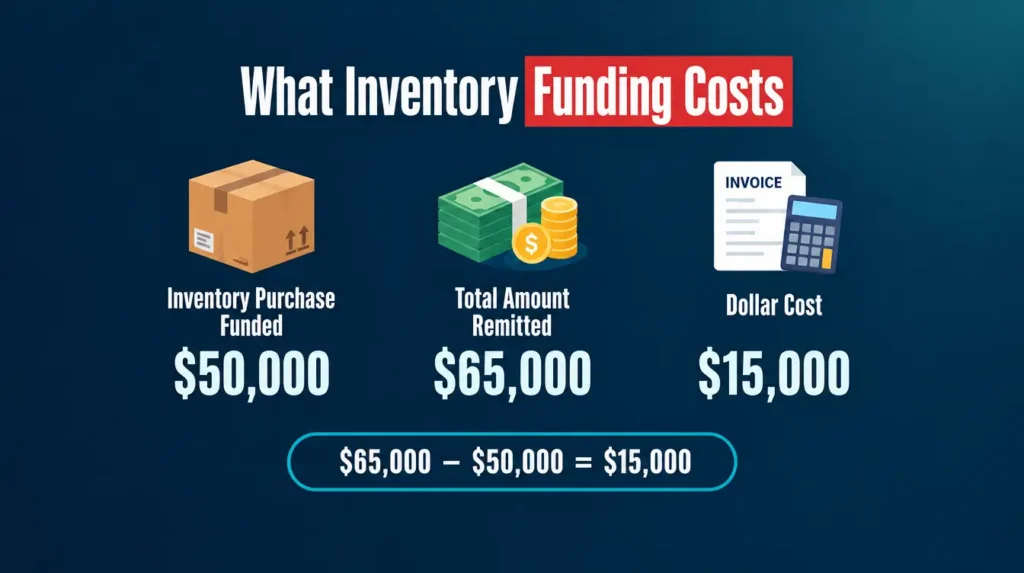
A merchant cash advance has a fixed dollar cost set when the agreement is made: the difference between what you receive and the total amount you remit. Compare that dollar cost with the gross margin you expect from the stock.
Hypothetical example (not a Legend Advance Funding offer or standard pricing):
| Item | Amount |
| Inventory purchase funded | $50,000 |
| Total amount remitted | $65,000 |
| Dollar cost | $15,000 |
If you expect that stock to produce more than $15,000 in gross profit on top of covering its own cost, and to sell within the advance term, the numbers can work. If the margin is thin or the timing is uncertain, they may not. Our merchant cash advance guide walks through how to compare offers in dollars.
When Funding Holiday Inventory Makes Sense

Outside funding usually makes sense when:
- You have a track record of selling this kind of stock in this season.
- A supplier deadline or early-order price makes timing matter.
- You expect to turn the stock within the advance term.
- Your slowest months can still carry the remittance.
It usually does not make sense when:
- The products are new and untested with your customers.
- The order is sized to best-case demand.
- You are already carrying an advance your deposits struggle to support.
- The stock will not sell until well after the season.
How Legend Advance Funding Handles Inventory Funding
We fund merchant cash advances from $20,000 to $3,000,000. Our baseline is at least 3 months in business, $20,000 or more in monthly revenue and an active US business checking account, with no strict minimum FICO for most programs. Existing advances are reviewed case by case. Decisions generally come within 24 hours of a complete application, and funding typically arrives within 24 to 48 hours after approval.
We are a direct funder and underwrite in-house. Before you sign, you see the amount funded, total amount remitted, remittance amount, frequency and estimated term in dollars.
For the bigger picture on planning around your busy season, see our guide to seasonal business funding. Retailers can also see how funding fits a store’s year on our retail business funding page.
Get Your Inventory Funding in Place
If your holiday order is due before your sales arrive, see what your business qualifies for. Applying takes about five minutes.
Check My Merchant Funding Options
Merchant cash advance terms vary by business and funding agreement. All funding is subject to underwriting, verification and approval. Available to US businesses only.