
A factor rate is the multiplier that sets the total dollar amount you remit on a merchant cash advance. Multiply the advance by the factor rate and you get the purchased amount. Subtract the advance from the purchased amount and you get the dollar cost. A factor rate is written as a decimal, such as 1.30, and it is applied once, at the start, not over time.
That makes the cost easy to calculate. It does not make two offers easy to compare, because the factor rate says nothing about how fast the money comes out of your account. This guide shows both.
How Does a Factor Rate Work?
When a funder buys a fixed dollar amount of your future receivables, the factor rate sets how large that amount is compared with the capital you receive.
- Advance amount: the capital the funder provides.
- Factor rate: the multiplier in your agreement.
- Purchased amount: advance amount multiplied by the factor rate. This is the total you remit.
- Dollar cost: purchased amount minus the advance amount.
Because the purchased amount is fixed when you sign, the dollar cost does not grow if a remittance takes longer to complete. It also does not shrink if you finish sooner, unless your agreement includes an early payoff discount. Ask about that before you sign.
How Do You Calculate the Total Cost?
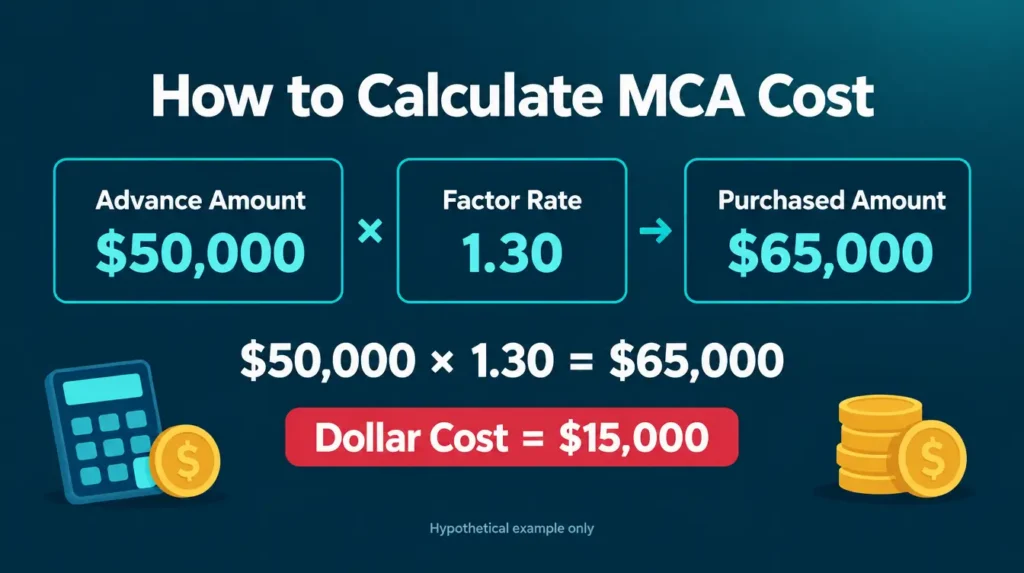
Use this formula:
Purchased amount = advance amount x factor rate
Dollar cost = purchased amount – advance amount
Hypothetical example (not a Legend Advance Funding offer or standard pricing):
| Item | Amount |
|---|---|
| Advance amount | $50,000 |
| Factor rate | 1.30 |
| Purchased amount | $50,000 x 1.30 = $65,000 |
| Dollar cost | $65,000 – $50,000 = $15,000 |
If any fee is deducted from the amount funded, use the amount that actually reaches your bank account as the advance amount when you work out what the capital cost you. The purchased amount stays the same, so the real dollar cost goes up by the amount of the fee.
What Does the Factor Rate Not Tell You?
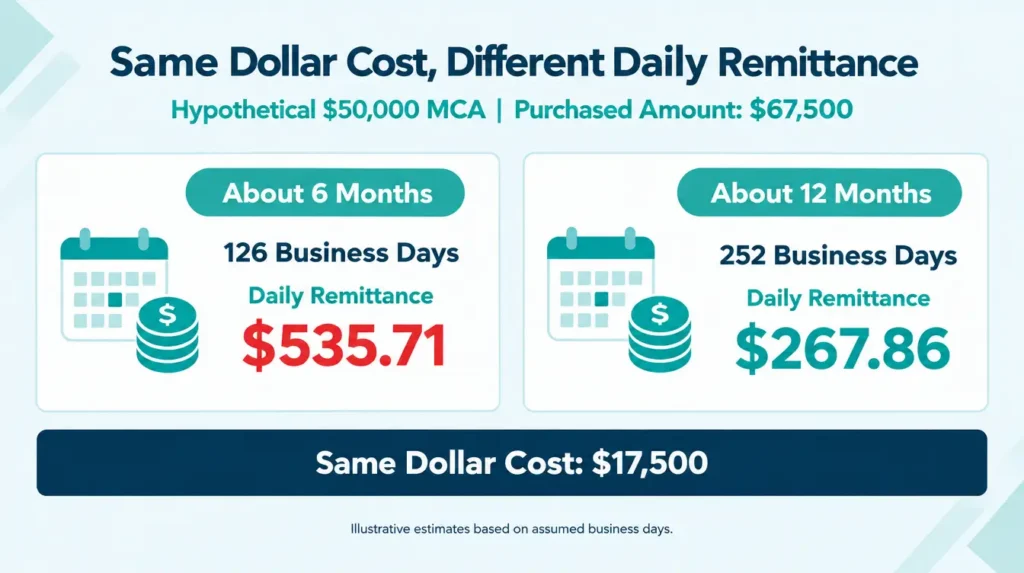
The factor rate tells you the total. It does not tell you the pace. Two offers with the same purchased amount can feel very different in your bank account.
Hypothetical example: a $50,000 advance with a $67,500 purchased amount.
| Estimated term | Business days | Daily remittance |
|---|---|---|
| About six months | 126 | about $535.71 |
| About twelve months | 252 | about $267.86 |
The dollar cost is $17,500 in both cases. The daily draw on your account is twice as large in the six-month version. If your slowest weeks cannot carry the larger amount, the “same cost” offer is not the same for your business.
Why We Show Cost in Dollars
A merchant cash advance is the purchase of future receivables, not a loan, and its cost is a fixed dollar amount set in the agreement. So the clearest way to understand it is in the dollars that leave your account: what you receive, what you remit, how much each remittance is and how long it runs.
At Legend Advance Funding, you see the amount funded, the total amount remitted, the remittance amount, the frequency and the estimated term, all in dollars, before you sign.
How to Compare Two MCA Offers
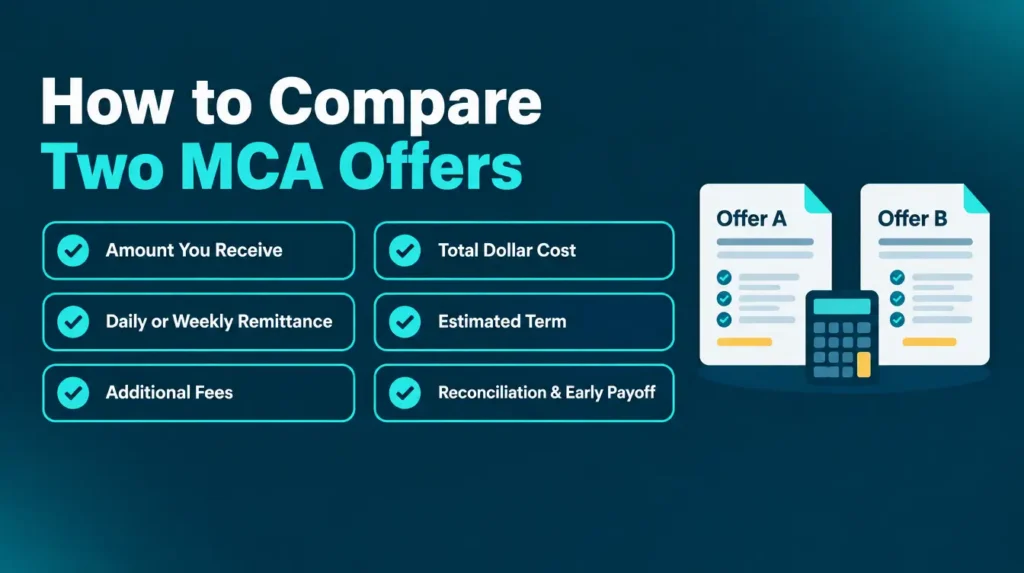
Put both offers in the same table and compare every line, not just the factor rate:
| Compare | Question to ask |
|---|---|
| Amount that reaches your account | After any fees, how much do I actually receive? |
| Purchased amount | What is the total I will remit? |
| Dollar cost | Purchased amount minus what I receive |
| Remittance amount | How much is taken each time? |
| Frequency | Daily or weekly? |
| Estimated term | How long will remittances run at that amount? |
| Fees | Are there any fees not already in the numbers above? |
| Reconciliation | If my sales drop, what does the agreement allow, and how do I request it? |
| Early payoff | Is there a discount if I finish early? |
Then test the remittance against your slowest month, not your average one. A lower factor rate with a remittance your business cannot carry is a worse offer than a slightly higher one that fits.
See Your Own Numbers
The fastest way to understand your cost is to see a real offer laid out in dollars. Applying takes about five minutes, and decisions generally come within 24 hours of a complete application.
Check My Merchant Funding Options
For the bigger picture, read our guide to what a merchant cash advance is, or see how an advance compares with a line of credit and a term loan.
All figures on this page are hypothetical examples, not offers or standard pricing. Merchant cash advance terms vary by business and funding agreement. All funding is subject to underwriting, verification and approval.